Jaffna in contemporary Sri Lanka could be surmised as the epitome of the Hindu-Tamil culture in Sri Lanka. However from the archaeological evidence available it could be confirmed that in the ancient times Buddhist culture had spread to the north as well as to other places of Sri Lanka. With the fall of the Polonnaruwa kingdom in the 13th c. A.D. a separate political administration emerged in the Jaffna peninsula, also known as Nagadipa and its survival was established by being the controlling centre of the trade route between India and Sri Lanka. In this manner Jaffna was able to build up an independent state to exert at present a strong political influence over the administration of Sri Lanka as in the ancient times. The historicity of Jaffna and its residual evidence is exemplified by the existence of the Dutch Fort and the host of other archaeological monuments associated with it, though they are seen to the present day as ruins.
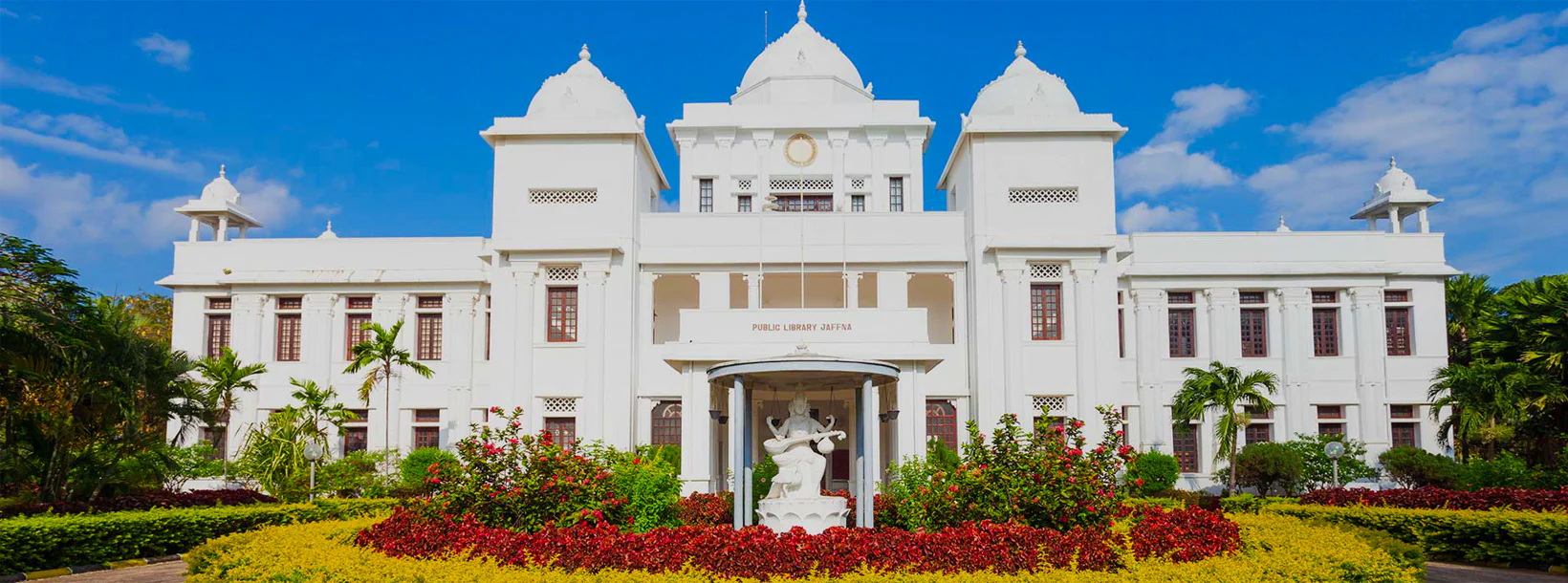
The Jaffna Fort and the buildings that had come up during the occupation of the island by the Portuguese, Dutch and the British shows the architectural features relevant to those periods of construction. These buildings have been destroyed during the 30 year old internal strife that ravaged the country.
Jaffna Fort, the second biggest Dutch fort built in Sri Lanka is an archaeological monument that has had a direct onslaught as a result of the recent 30 year of armed conflict. Although a portion of its seaside rampart had been destroyed due to a continuous offensive from the LTTE the fort taken as a whole has not undergone a severe destruction. An outer moat exists outside the ramparts. Outside the moat is the outer rampart which has built in to it five tunnels each in a twin formation. Although the tunnels are in good preservation they are presently void of doors. However they show signs that they have had doorways in the past.
The monuments within the fort had been destroyed during the conflict that raged in the area. Of these the monument named the Queen’s Palace is in sufficient level of preservation than the rest as it could be identified. Its superstructure is completely destroyed and the remaining walls are in the process of being destroyed due to the presence of invasive plants having taken roots in them.
The short parapet wall constructed to the style of Dutch architecture in front of this building has by and large been spared of destruction. Behind the building is an access to the rampart with an ornate trellis balustrade. This access may have been used by the Dutch to transport arms to the rampart. There is evidence to show that a verandah with two ponds of the Dutch architectural style had existed in front of the Queen’s Palace.
The Dutch church located within the fort had been bombed and completely destroyed. As this structure had been documented its ancient layout could be identified. Its broad walls had been constructed in limestone.
The other buildings such as the old prison, the hospital and the ancillary buildings have undergone much destruction. The belfry on the inner rampart is similar to those found in other Dutch forts. Presently their walls are missing.
Close to the boundary of the seaside rampart are a well believed to have been constructed during the Dutch era and a Hindu temple built at a later date.